Phoenix, AZ · Real Project
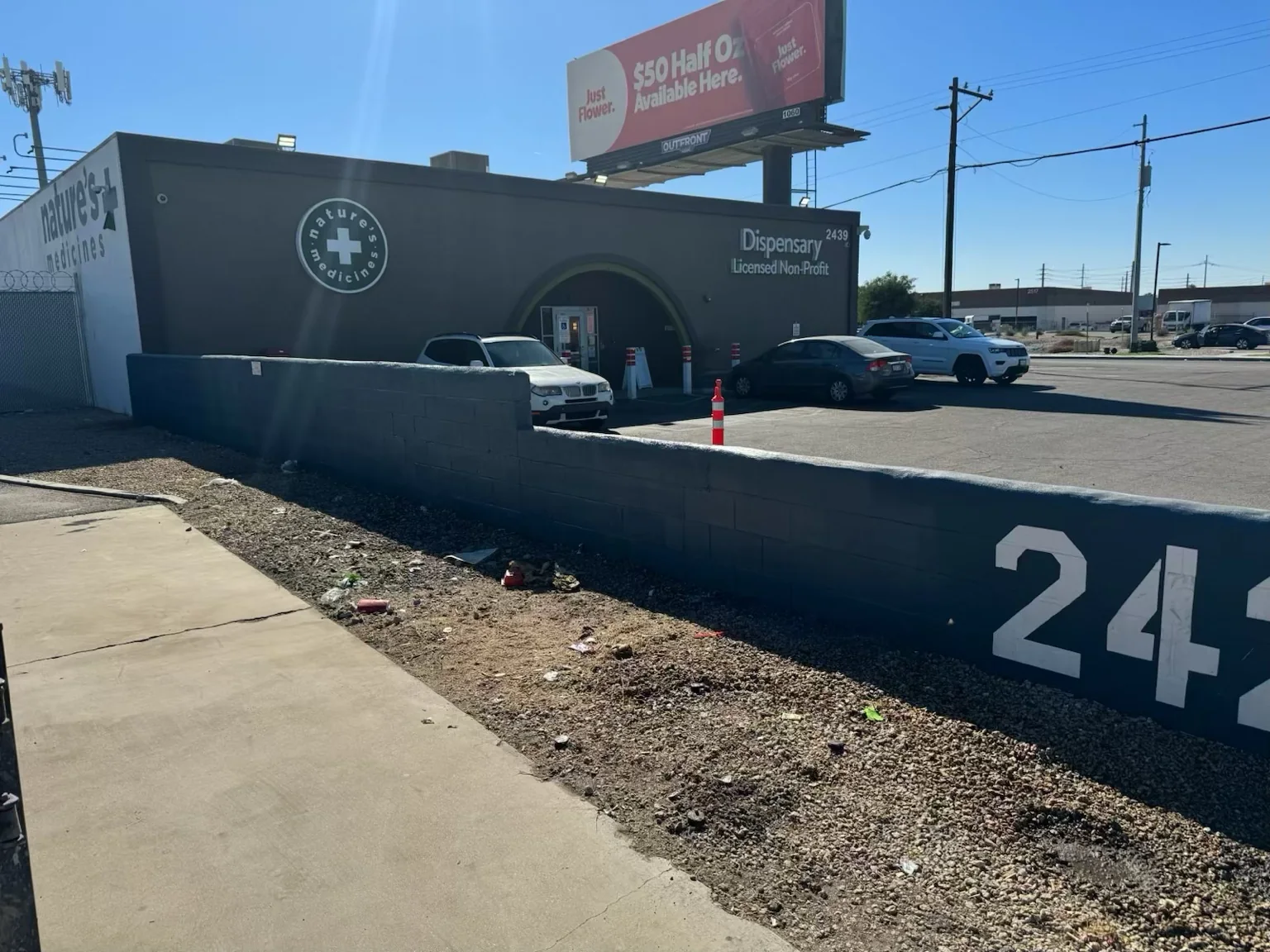
Vehicle-Damaged Block Wall
A localized commercial wall section was damaged by impact. Damaged masonry was removed and the affected section was reconstructed.
See Phoenix project →Block wall repair in Phoenix can range from a small localized masonry repair to a multi-thousand-dollar structural rebuild. The real price depends on what failed, how much wall must be opened or rebuilt, and whether the footing, reinforcement, access, finish or permits add work.
A block wall with one damaged course is not the same job as a six-foot wall that is leaning because the footing moved. A vehicle impact is not priced the same way as a long wall with erosion at the base. That is why a useful block wall repair estimate starts with the condition and repair scope, not with a generic price per linear foot.
For Phoenix homeowners, the biggest price jump usually happens when a job moves from a surface or localized masonry repair into demolition, partial reconstruction, pilaster reconstruction, footing work, reinforcement, or full section rebuilding.
The ranges below are broad 2026 Phoenix-area market references compiled from publicly posted local contractor pricing. They are not Desert Dreamco quotes, minimums or promises. A written estimate for your actual wall is the number that matters.
Published pricing across Phoenix-area masonry contractors varies substantially because contractors do not always include the same work in the same category. One “partial rebuild” may include demolition and cleanup only; another may include footing excavation, new reinforcement, grout, finish matching and haul-off.
| Repair category | Broad 2026 market reference | What can move the number |
|---|---|---|
| Mortar joint / tuckpointing work | About $8–$20 per linear foot in published local examples | Grinding, depth of deterioration, access, matching and minimum service charges |
| Localized crack or small masonry repair | Often hundreds to roughly $1,200 depending on the repair | Crack type, block replacement, reinforcement, finish and whether movement is active |
| Pilaster / column reconstruction | Published local examples commonly fall around $900–$2,500 each | Height, footing condition, rebar, grout, attached gate hardware and finish |
| Partial wall rebuild | Published examples range from roughly $1,200–$3,500 for a short section; footing work can push the same section into roughly $2,500–$6,000+ | Length, height, demolition, footing, reinforcement, block type, access and haul-off |
| Larger structural / multi-section repairs | Often several thousand dollars; some Phoenix contractors publish starting points around $4,500+ for larger structural scopes | Multiple panels, failed footing, difficult access, drainage, engineering, finish and permits |
Why the ranges overlap: “repair,” “partial rebuild,” and “replacement” are not standardized estimating terms. Always compare the written scope, not only the total price.
A visible crack may affect only a few blocks, or it may be the surface sign of movement across an entire panel. Removing one damaged section costs less than dismantling several courses or rebuilding between pilasters.
More height means more masonry, more handling and often more reinforcement and grout. Standard gray CMU, slump block, decorative units, caps, stucco and painted finishes also have different material and matching requirements.
This is one of the biggest variables. If the existing footing is stable, a localized reconstruction may be possible. If the footing has cracked, rotated, settled, been undermined by erosion or is otherwise unsuitable for the repair scope, excavation and concrete work can change the project substantially.
Rebar, dowels, grouted cells and connections between the repaired section and existing construction affect both labor and material cost. A wall that only looks like “stacked block” from the outside can require significant concealed work.
A wall facing an open driveway or commercial lot is different from a backyard repair behind a pool, narrow side yard, mature landscaping, AC equipment or finished hardscape. Limited access can increase hand demolition, material handling and cleanup time.
Damage next to a pilaster or gate can involve more than the wall panel. Gate hinges, steel posts, anchors, electrical equipment or a displaced column may need to be separated, protected, reset or reconstructed.
Matching an older wall can require additional work. Block color and texture change with age; stucco, paint, caps and mortar also weather differently. A structural repair and a nearly invisible cosmetic match are two different scopes.
Broken CMU, mortar and concrete are heavy. Haul-off, dump fees, protection of adjacent property and cleanup are real parts of the cost even though they are not visible in the finished wall.
A simple maintenance repair and a structural reconstruction are not always treated the same way by the local jurisdiction. Wall height, retaining conditions, location, reconstruction scope and structural changes can affect what is required.
Repair usually makes the most financial sense when the damage is localized and the surrounding wall, pilasters and footing remain suitable. Examples can include isolated impact damage, loose caps, limited mortar deterioration or a damaged panel that can be reconstructed without chasing movement into adjoining sections.
Rebuilding becomes more likely when the wall is severely out of plumb, partially collapsed, repeatedly cracking after prior patching, undermined at the base, or affected by a footing problem that cannot be left in place. In those cases, paying for a cosmetic patch can be more expensive in the long run if the wall continues moving.
Cost guides are useful, but real projects show why two walls with similar visible damage can require different scopes. Desert Dreamco LLC has documented repair and reconstruction work around the Valley.
A localized commercial wall section was damaged by impact. Damaged masonry was removed and the affected section was reconstructed.
See Phoenix project →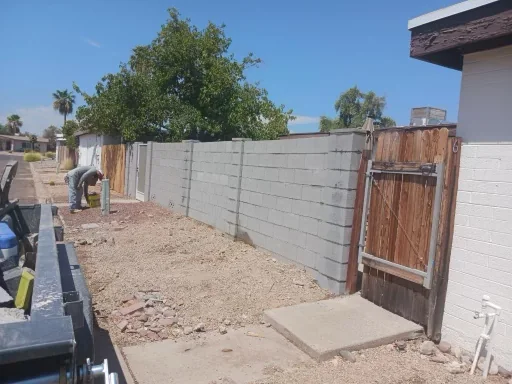
A failed wall section required reconstruction rather than a surface patch. Collapse changes demolition, handling and rebuilding requirements immediately.
See Mesa project →A crack can sometimes be localized masonry damage. A lean means the geometry of the wall has changed. The scope may need to address the wall panel, the base, a pilaster, soil or water conditions, or the footing. That is why pricing a leaning wall from the crack alone can be misleading.
If you can visibly see the wall tilting, separating from a column, bowing, or moving when touched, treat that as more than a cosmetic repair question. Keep people away from an unstable wall and have the condition evaluated before attempting repairs.
After a vehicle hits a block wall, the broken opening is only the obvious damage. The repair scope may extend farther if adjacent blocks, mortar joints, reinforcement or a pilaster were displaced by the impact. A clean reconstruction sometimes requires removing material beyond the visibly broken blocks so the new section can be tied into suitable existing work.
Phoenix-area walls are exposed to intense heat followed by periods of irrigation, runoff and monsoon rainfall. When water repeatedly affects soil at the wall base, erosion or movement can change the repair from masonry-only work into a larger scope. Fixing the wall without addressing an active water problem can allow the same condition to return.
Permit requirements depend on what is actually being done. The City of Phoenix lists fences and walls among residential construction types that can require permits, and it publishes separate guidance for fences and retaining walls. A repair that simply maintains an existing condition is not necessarily the same as rebuilding a wall section, modifying height, replacing a footing, or working on a retaining wall.
For that reason, permit requirements should be checked against the specific property and scope before construction. HOA requirements, easements, right-of-way conditions and neighboring property issues can also matter even when they do not change the masonry itself.
For current municipal requirements, use the City of Phoenix Planning & Development Department’s official fences and walls resources. Requirements can change, and other Valley cities have their own rules.
A useful estimate should make it possible to compare scopes, not just totals. Depending on the project, look for clear wording about:
For an initial review, send more than one close-up. The most useful photo set usually includes:
Include your ZIP code and a short description of what happened: vehicle impact, storm, cracking over time, leaning, loose block, water at the base or a partial collapse. Photos cannot reveal every concealed condition, but they can make the first conversation much more useful.
Text 3–5 clear photos and your ZIP code to 623-226-0192. Desert Dreamco LLC can review the visible condition and determine whether the next step is a photo-based preliminary scope or an on-site evaluation.
There is no single price that fits every wall. Small mortar or isolated crack work may cost hundreds of dollars, while structural partial rebuilds, pilaster reconstruction, footing work and multi-section damage can run into several thousand dollars or more. Length, height, access, demolition, footing condition, reinforcement, finish and permits all change the estimate.
Sometimes a contractor may use a per-foot figure for a well-defined repeated scope, but it can be misleading for repairs. Ten feet of cosmetic mortar work and ten feet of wall that requires demolition plus a new footing are not comparable jobs. For repair work, the written scope matters more than a generic per-foot number.
It depends on why it is leaning. If the affected area can be safely reconstructed while suitable footing and adjacent construction remain in place, a partial repair may be less expensive. If the footing has moved or the wall is broadly unstable, rebuilding the affected section may be the more appropriate long-term scope.
No. Many impact repairs are localized. The affected section may be reconstructed without replacing the entire perimeter wall when the remaining wall and supports are suitable. The repair still needs to account for damage that extends beyond the obvious opening.
Photos can often identify the general repair category and may support a preliminary scope. They cannot confirm concealed footing, reinforcement, grout, subsurface soil or every hidden condition, so some repairs require an on-site evaluation before a final price is appropriate.
Possibly. Permit requirements depend on the city, wall type, height, location, retaining conditions and scope. Phoenix publishes specific fences-and-walls permit guidance, and other Valley cities have their own rules. Requirements should be verified for the actual property before work begins.
Repair and reconstruction options for cracked CMU wall sections.
What changes when a wall is no longer plumb or stable.
Localized impact damage, pilasters and reconstruction.
When the base of the wall becomes part of the repair scope.
Text clear photos and your ZIP code. We handle cracked, leaning, collapsed and impact-damaged block walls throughout the Phoenix Valley.